

Drones have been around for many years, they are used for several different purposes and can be very helpful in many areas. However, drones have become much more popular in recent times, and their application has increased rapidly in various fields. Before we get to this, let’s answer the main question: “what is a drone and how we can define it?”.
A drone, also called an unmanned aerial vehicle (UAV), is an aircraft that operates without a human pilot onboard. It can be controlled remotely by an operator or fly autonomously using onboard sensors, software, and GPS navigation.
The word “drone” has several different meanings, and it originates from the old English word drān, drǣn, which means ‘male bee’. When talking about a drone as an electric device, we are thinking of a missile or a remote-controlled pilotless aircraft.
Drones are part of a larger unmanned aircraft system (UAS) that includes the aircraft itself, a ground controller, and communication links used to operate the vehicle.
Today, drones are used across many industries including military operations, commercial services, aerial photography, mapping, inspections, and agriculture.

No doubt, drones are among the most advanced devices in today’s aeronautics, electronics and robotics alike. In the following text, you will find out more about the drones, how they work, what their main features are, their applications in a variety of fields, types of drones, and the future of drones.
How do drones work and what are their main features?
In order to understand better how drones fly and work, we need to know some basic information about the construction of a typical drone.
Drones, or unmanned aerial vehicles (UAVs) are made from different light composite materials in order to increase maneuverability while flying and reduce weight. they can be equipped with a variety of additional equipment, including cameras, GPS guided missiles, Global Positioning Systems (GPS), navigation systems, sensors, and various other drone software and hardware.
Drones can come in a broad range of shapes, sizes, and with various functions. The vast majority of today’s models can be launched by hand, and they can be operated with a remote control or from special ground cockpits. The commercial models come in small sizes and have simplified construction. These drones are suitable even for kids because they are very easy to control. And, if you want to find out more about them, we suggest checking out our article about best commercial drone models.

There are different variations in the frame and construction of drones, but the essential components that every drone must have is a waterproof motor frame, flight and motor controllers, motors, transmitter and receiver, propellers, and a battery or any other source of energy.
Yes, these small aerial acrobats are able to pack a lot of accessories into their metal or plastic frames. Most drones are ready to fly upon purchase. However, some people like building a drone themselves using kits, and to get more familiar with that topic, we suggest reading our article about the best drone kits and why are they are the best.
What makes these unmanned aerial vehicles remarkable is their great flight capability. Drones have ultra-stable flight, and they can hover and perform different acrobatics in the air. How far you can fly your drone depends on the space you are flying it, as well as the line of sight.
You can certainly fly a drone beyond the line of your sight, but it increases the risk of hurting someone, crashing your drone, or damaging someone’s property.
When it comes to commercial drones for entertainment, they have a short control distance and can fly for just a few minutes. On the contrary, the advanced drones which are used in the military or mapping are able to hover for hours in the air and be controlled from a great distance. Military drones are often the most advanced, and in fact are a large source of innovation in drone technology.
Commercial Drone Applications
Commercial drones are widely used across industries because they can collect aerial data quickly and safely.
Some of the most common commercial drone applications include:
aerial photography and videography
construction and infrastructure inspections
agriculture monitoring
surveying and mapping
real estate photography
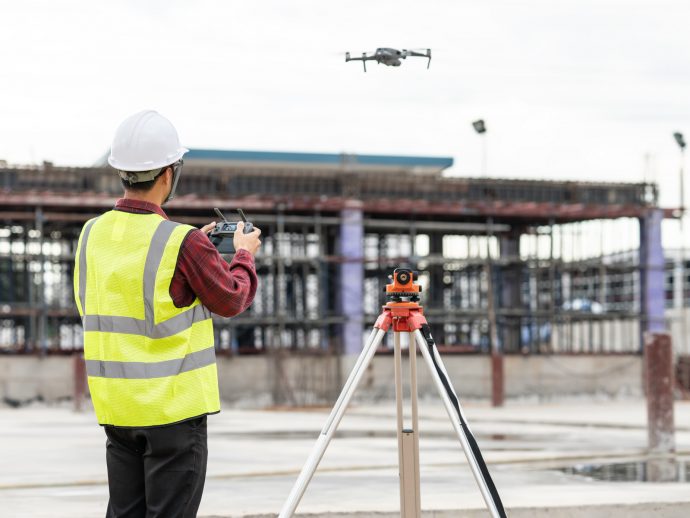
If you’re interested in working with drones professionally, you can read our guide on how to become a commercial drone pilot.
Drone Regulations and Licensing
As drones become more common, many countries have introduced regulations for drone pilots.
For example:
In the United States, commercial drone pilots must pass the FAA Part 107 exam.
In Europe, pilots may need an EU drone license depending on the drone weight and flight location.
Entertainment Purposes
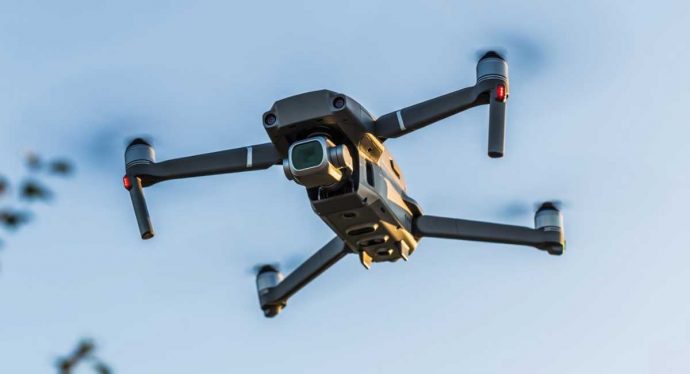
Beside these “serious” works, mini and micro-drones (especially, small micro quadcopters) are widely used for the entertainment purposes. Nowadays, the civil use of drones is a completely normal thing, and you can legally buy them over the Internet at an affordable price. Some people just want to buy a drone and fly it around, maybe take pictures, or maybe just to enjoy the remote control flying object at the tip of your fingers.
Drones are quite easy to control, and you don’t have to possess any driver’s or RC pilot’s license to fly them. This is a great source of fun, and people throughout the world enjoy flying drones. Even drone racing has become a huge thing. With people customizing the fastest, most agile drones to beat out the competition.
Classification – different types of drones
Classification of the drones may sound impossible, due to the fact there are a lot of different models, with different features, sizes, and price. The most popular way to classify them is by size.
Nano and mini drones
The smallest drones on the planet are members of these categories. They can be divided into two groups: Nano and Mini drones.
Nano drones are the smallest and they usually have the same dimensions as insects. On the other side, mini drones can reach up to 50cm in length and they have more powerful electric motors and more advanced features than Nano drones.

In general, models from both categories are used by the military, in spying and smaller tasks, due to the fact they can be easily maneuvered and they can reach remote locations. On the other side, there are several models on the market that are available to ordinary consumers, and to find out more about them, we suggest checking out our article about micro (nano) quadcopters. They have a very small radius, between 1 and 3 km and they cannot fly more than 10-20 minutes. For surveillance purposes, these are the drones to have.
Drones with small sizes
Drones from this group have dimensions between 50 cm and 2 m. They don’t have powerful motors so they must be thrown into the air, in order to start flying.
These products are also very popular on the market because they have great features and they are more affordable than bigger drones.

These drones are also the most common type of drones available to average customers. Simply said, most drones that you can see on the market are members of this group. All of them have a radius of 5 km and they can fly between 20 and 40 minutes. If you are looking for an accessible, affordable drone that you just want to fly or use for one of your hobbies, this is the type of drone for you.
Drones with medium sizes
Every drone that has a wingspan between 5 and 10 m falls into the medium category. These drones can carry up to 200 kg of weight and they have powerful motors.
In addition, a single person cannot carry a drone from this group, so they are not a common choice of ordinary people.

These drones are usually used for transporting goods, to remote locations and by the military. Keep in mind that these drones are still smaller and lighter than other light aircraft. They can fly up to 50 km and their flying time can be long as 6 hours.
Big drones
A drone with a wingspan bigger than 10m is a member of this group. In general, these drones have the same dimensions as smaller aircraft and they are used by the army primarily. A civilian cannot buy this drone, due to the fact it is treated as an aircraft.
Most drones are equipped with weapons and missiles, so they are used in tactical attacks or when sending human pilots is a high risk. It is believed that big drones will completely replace the aircraft that require a pilot in the near future.
Of course, this type of aircraft comes with its own host of political and moral concerns. Primarily, the fact that it removes people from the consequences of their actions, so the potential for carelessness and collateral damage is high. This article will not dive into these issues, as we are just focusing on drone technology, but it is important to be aware of the amount of concerns and debates concerning military drone usage.

Due to the fact that there are a lot of different drones from this group, they can be classified in these smaller groups for further specification:
- Short range models. They can fly up to 150 km and more than 11 hours.
- Drones withy medium range. These drones can have a range of 650 km and they are commonly used in weather forecasting.
- Drones with the longest radius. Drones from this group can fly up to 30.000 ft. above the sea level and they can stay in the air more than 36 hours. The main goal of these drones is to reach remote distances.
Types of Drones
Modern drones come in many forms depending on their purpose. Some are designed for recreational flying, while others are built for commercial or military missions.
If you want to explore the different categories in more detail, you can read our guide on the types of military drones used in modern warfare.
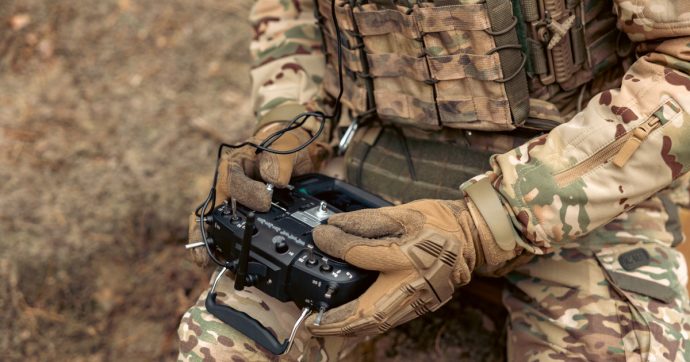
Military drones range from small reconnaissance UAVs to large long-endurance aircraft capable of surveillance or strike missions.
The future of drones
Nowadays, drones are extremely popular and they have countless applications. However, in the future, they are going to continue getting better and better, so they will have even more applications. Even today, drones are used for transporting goods to remote locations, for surveillance and much more. In the future, we can expect to see drones that can do this much faster and more efficiently. Perhaps we will see some uses for drones that we could not even imagine today.
There are a lot of speculations on what drones will be capable of in the future. The most likely thing they will do is package transport. At this moment, Amazon is testing their Amazon Prime Air service. This means that when you order a package, it will be delivered to you in less than 30 minutes, instead of a few days.

Although this service isn’t available right now, nor it will be anytime soon, it is very likely that in a few years Amazon will be able to achieve this goal. According to this company, 87% of their packages have a weight of 5 pounds, so they have small dimensions. All of these packages can be delivered by a drone. Talk about revolutionizing an industry. The main concern is whether people would be comfortable with many drones flying around their city or neighborhood, and whether legislation will be put in place to allow this or not.
Zookal, a textbook company from Australia, has a similar idea. They want to deliver their textbooks to the customers via drones as well. On the other side, their service is a bit more advanced than the Amazon Prime Air, due to the fact that in this case the drone won’t have to land. It will lower the package directly to the customer. He/she will use a smartphone in order to navigate the drone. From right to your door to right to your person!

A related fact is that these new businesses will open up many new job opportunities. This is due to the fact people will have to be trained to fly, program and maintain these drones. However, with all this automation it is also expected that drones will reduce the employment in certain areas, due to the fact many companies are going to use them in order to make their services easier to get. This will eliminate the need for humans to do many jobs that drones can do more efficiently. This also means that we will see a lot more drones in the sky in the future.
Features that drones have now are going to be upgraded as well. For example, future drones will have better cameras and more storage space. On the other side, some of them may be able to record during the night, so they will probably be used by the military.
The materials used in the manufacturing of drones are going to be changed as well. We can expect to see lighter materials that are stronger than materials used today. Paired with more efficient electric motors, future drones will fly longer and be able to reach higher speeds.
Of course, we cannot ignore the military applications future drones will have. They will probably replace combat aircraft, therefore, reduce the number of lost lives! Some drones will be able to carry powerful weapons, so they will be used in conflict. Whether or not these applications continue to expand depends on the politics of this issue and whether legislation is put in place to allow continued development of combat drones.

Further military applications include surveillance, even more so than today. Extremely small drones will be able to pass enemy lines and gain valuable information about the enemy army. Eventually, they will be able to collect all the data an army needs, so spies and spy satellites won’t be needed as much anymore. For more information on this interesting topic, we suggest taking a look at our article about drone trends and what the future will bring for drones.
As you can see, the types of drones and their many applications today and into the future almost seems limitless. As drones continue to develop, their usage and functions certainly will as well. We do not know for sure what the future holds, but it is definitely a fascinating topic. So if you have a keen interest in technology, it is well worth it to stay up to date on the world of drones.


